
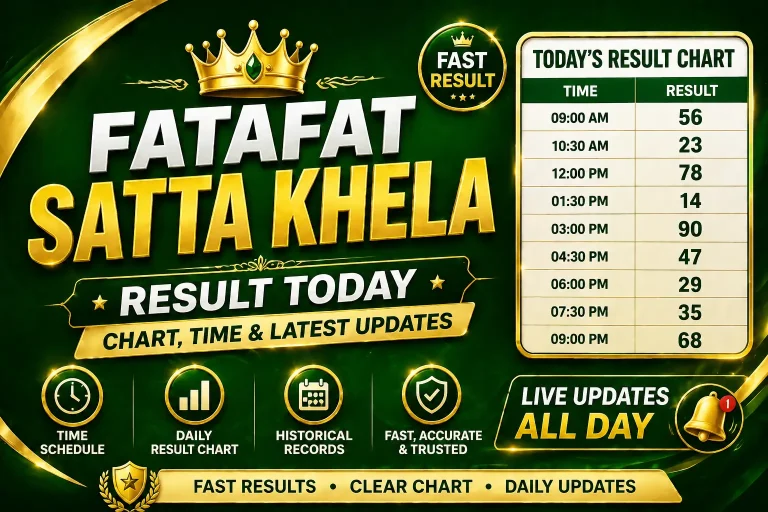
Many users regularly check fast-updating number result pages that follow a fixed daily schedule. Fatafat Satta Khela are designed to provide quick updates throughout the day, making it easier to stay informed without waiting long interval.
Most visitors are looking for simple and direct information. They want to see today’s results, understand the time schedule, and view everything in a clear chart. Because of this, pages that present structured and easy-to-read data tend to perform better and attract repeat visits.
Understanding the Basic Format
At its core, this format is built around multiple updates within a single day. Instead of a single outcome, there are several rounds scheduled at specific times.
Each round follows a consistent flow. A time is assigned, a result is released, and the information is added to a chart. This continues throughout the day, creating a complete timeline from morning to evening.
Because updates happen frequently, users often return several times a day to check the latest information. Over time, this consistency makes the system easier to follow and more predictable in terms of timing—not outcomes.
Result Today
Today’s results are presented in a simple and organized way. Each entry includes a time and its corresponding number, allowing users to quickly scan and find the latest update.
As the day progresses, new results are added in sequence. This creates a complete view of all updates in one place without requiring users to navigate across multiple pages.
A clear layout improves usability. When the latest result is easy to spot, users tend to stay longer and return more frequently for updates.
Time Schedule and Updates
The time schedule is one of the most important elements of this system. It tells users exactly when to expect new results and helps them plan when to check updates.
Most schedules follow a steady pattern, starting in the morning and continuing at regular intervals throughout the day. Even if minor variations occur, the overall structure remains consistent.
This reliability builds user habit. Instead of guessing, users become familiar with the timing and check results more efficiently.
Understanding the Chart Format
The chart acts as the central hub of information. It organizes all results into a structured table, making it easy to read and compare entries.
Each row typically includes:
- Time
- Result number
- Date
As new entries are added, the chart forms a complete overview of the day’s activity.
This format is especially useful for quick scanning. Instead of reading long explanations, users can immediately locate the information they need. It also helps when comparing how results change throughout the day.
Daily and Monthly Records
Beyond current updates, many users also look at past data. This is where kolkata daily and monthly records come in.
Daily records show real-time updates and are refreshed frequently throughout the day. These are the most actively viewed sections.
Monthly records, on the other hand, serve as an archive. They allow users to review past results in a structured format, organized by date.
Having both current and historical data in the same system improves navigation and provides a more complete picture.
Tarikh-Based Tracking and Number Patterns
In addition to regular result tracking, some users prefer to organize information based on specific dates, often referred to as “tarikh.” This approach is reflected in searches like kolkata fatafat 19 tarike tips, 1 tarikh kolkata fatafat tips , and kolkata fatafat tips 13 tarikh.
Instead of treating results as a continuous stream, this method focuses on grouping entries by calendar date. Users compare how numbers appear on the same date across different days or months, looking for repetition or familiar sequences.
This approach offers a more structured way to analyze information. It allows users to:
- Break down results into date-specific segments
- Compare patterns tied to particular days
- Narrow their focus when reviewing large amounts of data
At the same time, it’s important to keep expectations realistic. While this method can make tracking more organized, each result remains independent. The value comes from clarity and consistency in observation rather than predictability.
Why Users Visit Multiple Times
Frequent updates are the main reason users return multiple times a day. With new results released regularly, there is always something new to check.
Convenience also plays a big role. When results, charts, and schedules are presented in one place, users don’t need to search elsewhere.
Clarity further improves engagement. A clean layout with structured data allows users to understand information quickly, which increases the likelihood of repeat visits.
Common Layout and Design
Pages that present this type of information usually follow a simple and functional design. The focus is on readability rather than visual complexity.
Key elements typically include:
- A clear and descriptive heading
- A visible and updated chart
- A consistent time schedule
Mobile optimization is also essential. Since many users access these pages on their phones, the layout must remain easy to read on smaller screens.
Consistency in design helps users navigate faster and builds familiarity over time.
Important Notes About Results
Since similar data may appear across different platforms, slight variations can sometimes occur. This usually depends on how each source updates or displays its information.
Because of this, users tend to rely on pages that maintain consistency and provide timely updates.
Understanding that multiple sources exist helps reduce confusion when comparing results.
Fast vs Slower Systems
The key difference between fast-update systems and slower ones is the number of updates released each day.
Fast systems provide multiple updates, creating a continuous flow of information. This keeps users engaged and encourages frequent visits.
Slower systems offer fewer updates, which limits interaction and reduces how often users return.
For users who prefer real-time tracking, faster systems are generally more appealing.
Summary
This system is designed to deliver quick, structured, and easy-to-read information. With multiple updates throughout the day, a clear time schedule, and a well-organized chart, users can follow results without confusion.
The combination of simplicity and consistency makes it easier to check updates, compare entries, and review past data. Whether focusing on current results or exploring historical records, the structured format ensures a smooth and reliable experience.
FAQs
1. How often are results updated?
Results are updated multiple times a day based on a fixed schedule.
2. What does the chart show?
The chart displays time, date, and result numbers in a structured format.
3. Why are there multiple updates in one day?
The system is designed to provide frequent updates so users can check results throughout the day.
4. Can past results be viewed?
Yes, past results are usually available in daily and monthly record sections.