
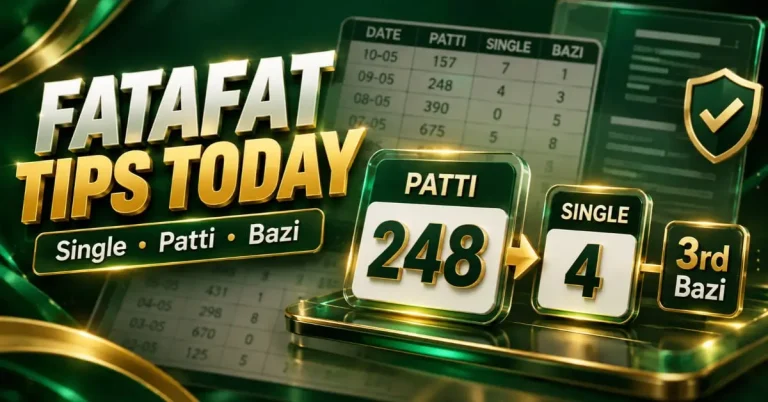
Fatafat tips are number suggestions associated with games such as Kolkata Fatafat. They may include Single or Patti numbers for a particular Bazi, but they should not be confused with confirmed results.
If you’re checking Fatafat tips today, the first thing to identify is whether a page displays suggested numbers, completed round results, or older chart records.
This guide explains those differences and how to read information for Kolkata, Gujarat, and Rajdhani Fatafat. For date-specific Kolkata selections, see the separate Kolkata Fatafat tips page. This article focuses on understanding the information rather than publishing live numbers.
What Are Fatafat Tips?
Fatafat tips are suggested number selections for upcoming rounds of a Fatafat-style game. Depending on the website, they may be arranged by date, round, Single digit, or three-digit Patti.
For example, a tips page might display several Single numbers beside the label “3rd Bazi.” Those numbers are suggestions for that particular round. They are not evidence that the numbers will appear when the result is declared.
A published result is different. It records the outcome reported after a round has finished.
This distinction matters because tips and results often appear in similar-looking tables. Readers should check the heading, date, round label, and publication status before interpreting any number.
Kolkata, Gujarat and Rajdhani Fatafat: What to Check
Kolkata, Gujarat, and Rajdhani Fatafat appear on separate result pages, sometimes with similar number formats. However, readers should not assume their schedules, published records, or update procedures are identical.
Kolkata Fatafat
Kolkata Fatafat, also called Kolkata FF, commonly organizes its results by Bazi. Each completed round can display a Patti and its corresponding Single digit.
On this website, the Kolkata Fatafat result page is the starting point for checking reported outcomes. Readers unfamiliar with the game can also use the Kolkata Fatafat beginner guide for a broader explanation.
The important detail is the Bazi number. A result from the second round should not be mistaken for one from the third, even when both appear under the same date.
Gujarat Fatafat
The Gujarat Fatafat page presents its records in a date-based chart with numbered round columns and associated digits.
To understand a Gujarat entry, identify the date first, then check the column containing the round you need. Read the three-digit entry and its associated Single together rather than treating them as unrelated numbers.
A Kolkata Bazi schedule should not automatically be applied to Gujarat records. Use the labels and timing information provided for the specific format.
Rajdhani Fatafat
The Rajdhani Fatafat result page organizes its records around scheduled result times and individual rounds.
Some entries combine a three-digit number and a Single, while the page may also provide result-status information.
When reading Rajdhani records, pay attention to the date, scheduled time, and publication status. If a round has not been confirmed, an earlier entry should not be mistaken for today’s outcome.
Although all three sections involve number records, their presentation and update schedules must be checked separately.
How to Read Single, Patti and Bazi Numbers
These three terms explain much of the information shown on Kolkata-style Fatafat charts.
Bazi refers to a round or session. A daily schedule may contain several Bazis, each identified by its position or expected result time.
Patti generally refers to a three-digit number recorded for a round. For example, 248 is a Patti.
Single is a digit from 0 to 9. In the Kolkata-style format, it is calculated using the final digit of the sum of the Patti’s three digits.
Example: Reading a Patti and Single
Suppose a chart contains this illustrative entry:
| Field | Example |
| Bazi | 3rd Bazi |
| Patti | 248 |
| Single | 4 |
The calculation is straightforward:
2 + 4 + 8 = 14
The last digit of 14 is 4, giving Single 4.
Some charts display the combined entry as 248*4, with the Patti before the separator and the Single after it.
This explains how the numbers relate to each other. It does not mean 248 is more likely to appear in a future round.
For additional three-digit references, visit the Kolkata FF Patti list. The Kolkata FF Bazi timing guide explains the round structure and provides a general schedule.
Fatafat Tips vs Results vs Historical Charts
Tips, results, and chart archives serve different purposes. Understanding the difference helps prevent confusion when browsing multiple Fatafat websites.
| Information | What it shows | Main limitation |
| Fatafat tips | Suggested numbers for a particular round | Not confirmed outcomes |
| Daily results | Reported numbers from completed rounds | Need source and date verification |
| Historical charts | Results recorded on previous dates | Cannot reliably predict future outcomes |
A page showing Single 4 as a tip does not establish that the result will be 4. Similarly, an older chart containing 248*4 is a record of what was reported for that date, not a prediction for the next round.
Historical charts are useful when you need to check a previously recorded number, compare entries from different dates, or identify the round associated with an old result.
Their value lies in preserving records, not guaranteeing future selections.
How to Find Fatafat Results by Date and Round
Looking for an older result is easier when you narrow the search to the game, date, and round rather than browsing random number lists.
Step 1: Select the Correct Fatafat Format
Start with Kolkata, Gujarat, or Rajdhani. Avoid mixing records from different formats merely because their charts contain similar numbers.
Step 2: Choose the Date
Check the date printed above the result table. A page title containing “today” does not, by itself, mean the displayed records are from the current day.
For earlier Kolkata results, use the Kolkata FF old result archive or the Kolkata Fatafat chart hub, which organizes chart information by month and year.
Step 3: Identify the Round
Find the appropriate Bazi number or scheduled time.
For example, someone looking for an afternoon result should first confirm the relevant round rather than selecting the first number shown for that date.
Step 4: Read the Numbers and Status
Once the correct entry is located, check its Patti, Single, and publication status.
Common status labels include:
- Awaiting update: No result has been published for the selected round.
- Published: The page reports an outcome for that round.
- Delayed: The expected update has not arrived.
- Corrected: A previously displayed entry has been revised.
These labels describe a website’s reporting status. A “Published” label alone is not independent proof that the number has been verified against an authoritative source.
Step 5: Check for Corrections
If the same date and round show different entries across websites, check the source details and correction history where available.
Do not assume that the newest-looking page is necessarily the most accurate.
Are Fatafat Tips Reliable? What to Verify
Fatafat tips should be treated as unverified suggestions, not dependable forecasts.
Some pages use earlier results, frequently occurring digits, or historical number sequences to explain their selections. While these methods can describe past records, they do not establish what will happen in a future round.
In a genuinely random process with independent outcomes, a number appearing repeatedly—or not appearing for several rounds—does not make its next appearance certain.
Check the Information Before Relying on It
A useful Fatafat page should make the following details clear:
- The game and date being displayed
- The Bazi number or scheduled time
- Whether the numbers are tips or reported results
- The source of result information, where available
- When information was updated or corrected
Be cautious of pages promoting “100% guaranteed tips,” “fixed numbers,” or paid access to supposedly certain outcomes. Such claims are not evidence that someone knows a future result.
Fatafat-style number games may involve financial risk, and their legality varies by location. Historical charts or suggested numbers should never be treated as a reliable way to earn money or recover losses.
Frequently Asked Questions About Fatafat Tips
Does “Fatafat Tips Today” always mean live information?
No. Some pages retain the word “today” even when the visible entries are from an earlier date. Always check the date beside the numbers and whether the relevant round has been updated.
Can Kolkata, Gujarat and Rajdhani use the same Bazi schedule?
Not necessarily. Their result pages may use different round labels, times, or reporting formats. Follow the schedule attached to the specific game instead of assuming that one timetable applies to all three.
Why are some Fatafat chart entries blank?
An empty entry may indicate that the round has not been reported, is delayed, or has no available record. It should not be interpreted as a result of zero unless the source explicitly reports zero.
What should I do when two websites show different results?
Match the game, date, and round first. Then compare their source information, update times, and any correction notices. If the discrepancy remains unresolved, treat the result as unverified.
Final Thoughts
Fatafat tips, daily results, and historical charts are easier to understand when their purposes are kept separate. Tips are suggestions, results are reported outcomes, and archives preserve information from earlier dates.
Whether you’re checking Kolkata, Gujarat, or Rajdhani Fatafat, start with the correct format, confirm the date and round, and verify the publication status before interpreting the numbers.
Past records can help explain what appeared previously, but they cannot guarantee what will happen next.