
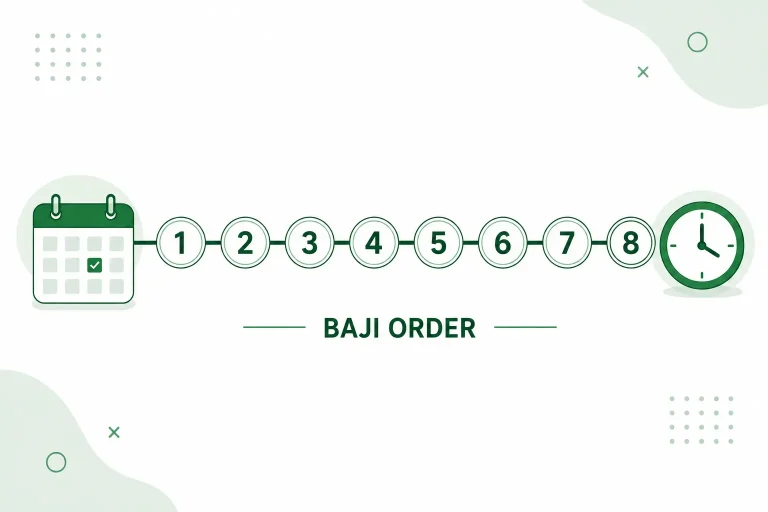
This page explains how Kolkata Fatafat records are organised sequentially by round, commonly called a Baji, within the Kolkataffs archive.
Time-based searches such as “8 baje result” usually refer to an evening result by approximate time. They should not be treated as another name for a Baji. This guide helps you navigate our daily and historical tables to locate specific numbered rounds. It does not provide predictions, tips, or gameplay guidance.
Find a Specific Baji Record
To view records for a particular day or month, use the archive links below:
- Today’s Result Page: View the available entries for the current date.
- Daily Tarikh Archive: Locate the complete Baji record for a specific past calendar date.
- Monthly Result Charts: Browse chronological tables displaying all Baji results compiled by month.
Understanding Baji and Baje Searches
Followers of the game often look for specific rounds using different search phrasing. To locate the correct entry in the archive, it is helpful to understand these terms:
- Ordinal Baji searches: Queries such as “1st Baji result,” “3rd Baji result,” or “5th Baji result” refer to a numbered position in the daily sequence.
- Time-based searches: Queries such as “8 baje result” use an approximate time label and may refer to a later evening round. Readers should confirm the Baji number shown in the dated result table.
For approximate round times and possible schedule variations, see the Kolkata FF Timing and Baji List.
Locating a Specific Round in the Archive
When navigating our consolidated daily or monthly tables, use the guide below to find the specific round you are looking for:
| Search wording | What to locate in the archive |
| 1st Baji result | First result position for the selected date |
| 3rd Baji result | Third result position |
| 5th Baji result | Fifth available result position |
| 8th Baji result | Eighth result position when recorded |
How Individual Baji Entries Are Displayed
Each Baji position normally contains a three-digit Patti and corresponding Single. For a complete explanation of that display and how to read the numbers, see How Kolkata Fatafat Digit Records Are Displayed.
Why Some Entries Show a Dash, X, or Fewer Bajis
Some archive tables may display a dash, X, blank space, or another availability note instead of a Patti and Single entry. This may occur if the result was still unavailable or could not be reasonably confirmed from the information reviewed.
Additionally, some dates, including many Sundays, may show fewer Baji entries. Holiday availability should be confirmed from the dated record rather than assumed. Check the dated archive entry, as the number of available rounds may differ by date.
Why Past Baji Results Do Not Predict Future Outcomes
Earlier Baji results do not establish the outcome of a later round. The archive records past entries by date and sequence; it should not be used as a prediction method.
Report a Possible Record Error
If you identify a discrepancy in our archive for a specific round, you can submit a correction report. To help us verify the data, please provide the exact date, the Baji number, the current Patti and Single shown, the expected entry, and a supporting public source link or a screenshot showing the date, Baji, Patti, and Single. For more details on verifying records, see our Verification Guide.
Independent Information Notice
Kolkataffs is an independent information website. It does not organise Kolkata Fatafat, accept bets, sell tickets, issue official results, or process payments or prizes. Archive entries are provided for reference and should be compared with a traceable public source where available.
Frequently Asked Questions
Why are results for different Bajis shown together?
Each Baji belongs to the same dated result sequence. Keeping all available rounds in one daily table allows readers to locate a particular Baji without opening separate result pages.
Do all dates have an 8th Baji result?
No. The number of recorded Baji entries can differ by date. While a standard weekday commonly features eight rounds, some dates—including certain Sundays and holidays—may show fewer Baji entries.
What does a dash or X mean in the archive?
A dash or X generally indicates that a normal Patti and Single entry is not displayed for that Baji. This may mean the result was still unavailable, could not be confirmed, or no additional round was recorded for that date. It should not be interpreted as a zero result.
Sources Used
Archive entries are compiled from publicly available result sources. Availability may differ by date and Baji. When an entry cannot be reasonably confirmed from the information reviewed, it may remain unavailable or be checked again later.